

Portfolio; Pieces/Samples
Target engagement, Binding evaluation.
“In-house protein production, coupled with robust binding assays gives the most bang for your buck”
To initiate a pharmacological investigation, it is essential to acquire large quantities of the drug target for various testing. Information on target binding such as dissociation constant (Kd) or crafting the optimal formulation (e.g. pH-dependent binding effects) requires the protein of interest and in our experience, lots of it. Therefore we are located in a protein-production facility where the target of interest can be produced in-house, vastly reducing the cost of a project.
We can perform Fluorescence polarization assays (Kd), ELISA (antibodies), FRET and more.
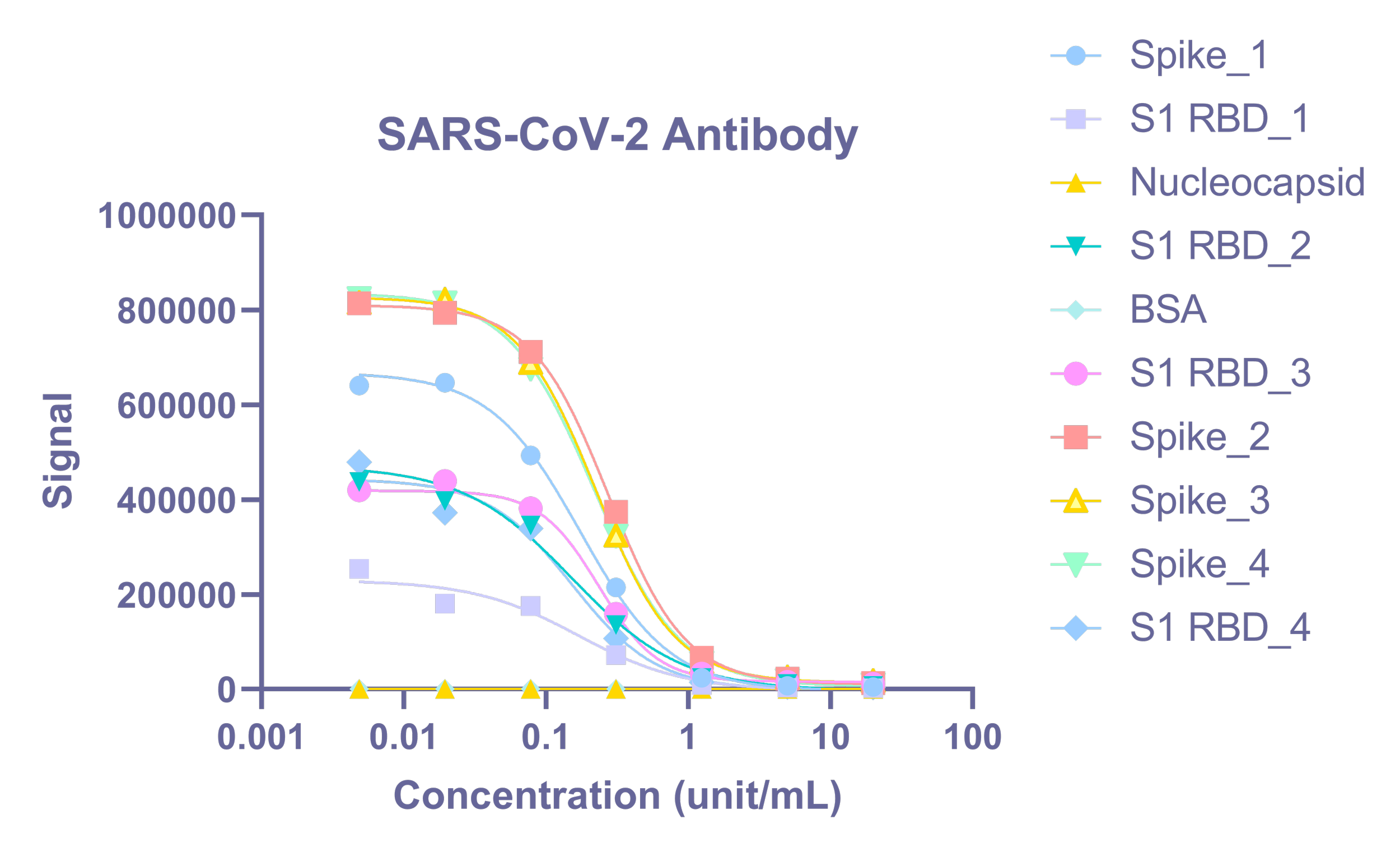
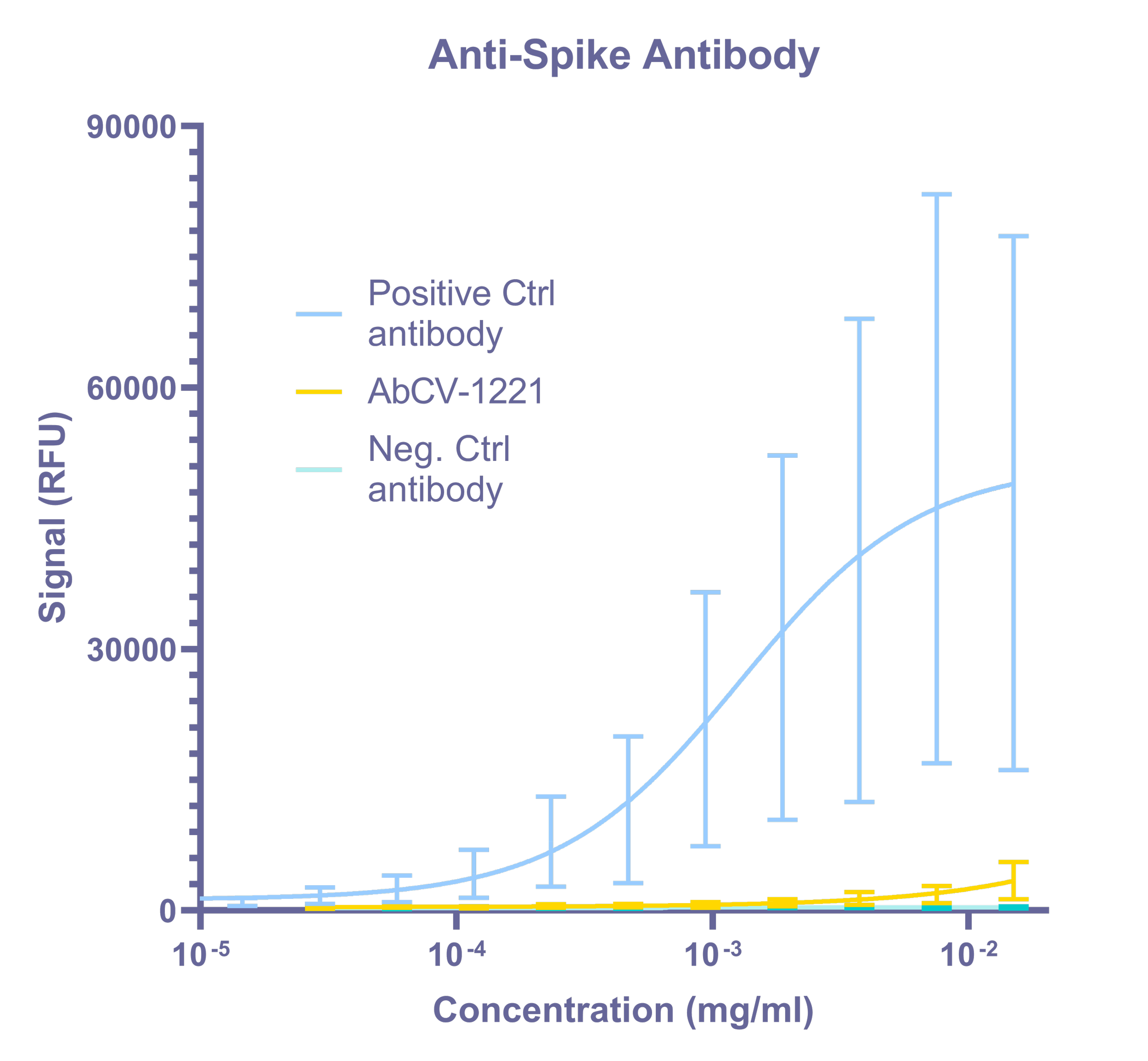
Mesoscale (MSD) evaluation of anti-SARS-COV-2 antibodies’ ability to block ACE2-binding from a battery of fragments from the spike protein.
Flow-cytometric evaluation of SARS-COV-2 binding antibodies against a cell-line over-expressing the spike-protein.
Apoptosis, Necrosis & Cell Viability.
“Kill the bad guys and spare the innocent.”
Robust and reproducible data for the overall health of cells exposed to a new drug is essential. Whether it is to test the toxicity of a drug on healthy cells or cancer-killing capacity of a novel cancer drug, we will screen apoptotic and necrotic markers in real-time up to 72 hours after treatment.
Furthermore, we also investigate the general health of treated cells using a viability assay, assessing all cells natural capacity to metabolize substrates.

Signaling cascades & second messengers.
“What exactly happens after target engagement?”
It is important to understand the mechanism of action after the initial screen of your drug target effect. We have set up several assays involving second messenger signaling, phosphorylation of proteins (phosphorylated vs. total), cAMP/cGMP-changes, PIP, DAG.
Apoptosis, Necrosis, and Viability of colon cancer cells (HCT116) in response to targeted immunotherapy.
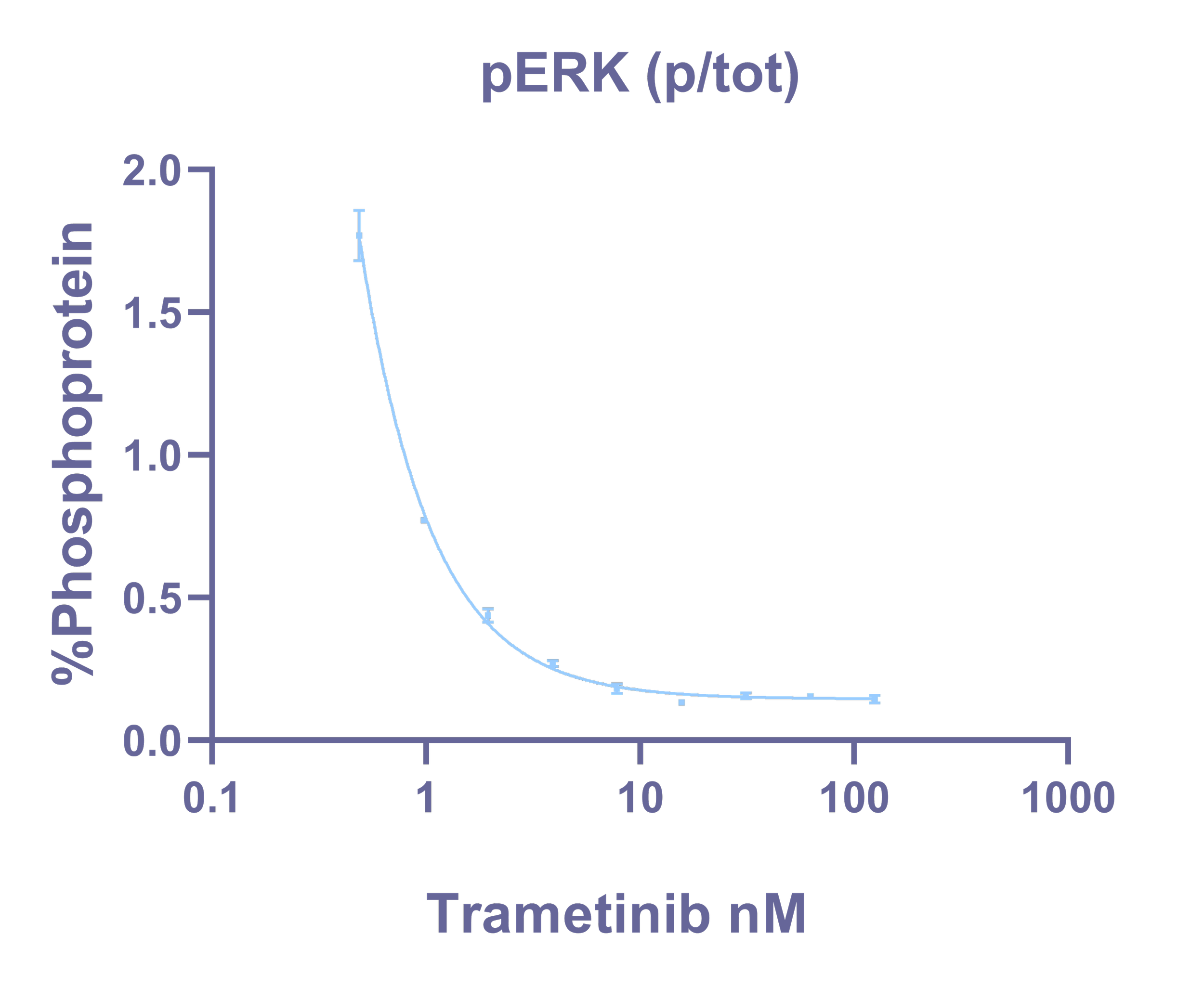
Intracellular signaling cascade (ERK-pathway) inhibited by the MEK-inhibitor Trametinib in cancer cells. The phosphorylation of ERK is diminished in the cancer cell with increasing concentration of Trametinib.
Calcium Flux and Calcium Imaging assays.
A “screening workhorse” and “mechanistic investigator” to receptor signaling.
To study drug candidates modifying receptor-mediated signaling, leading to slow waves of calcium in cells (e.g. VEGF or EGF), or ion-channels which lead to rapid calcium influx from e.g. voltage-gated ion channels (e.g. NaV or TRPV1).
We typically screen a large library of candidates using Ca-flux in 96-well format to then drill into mechanistic insights from the top-ranking candidates with state-of-the-art confocal microscopy.
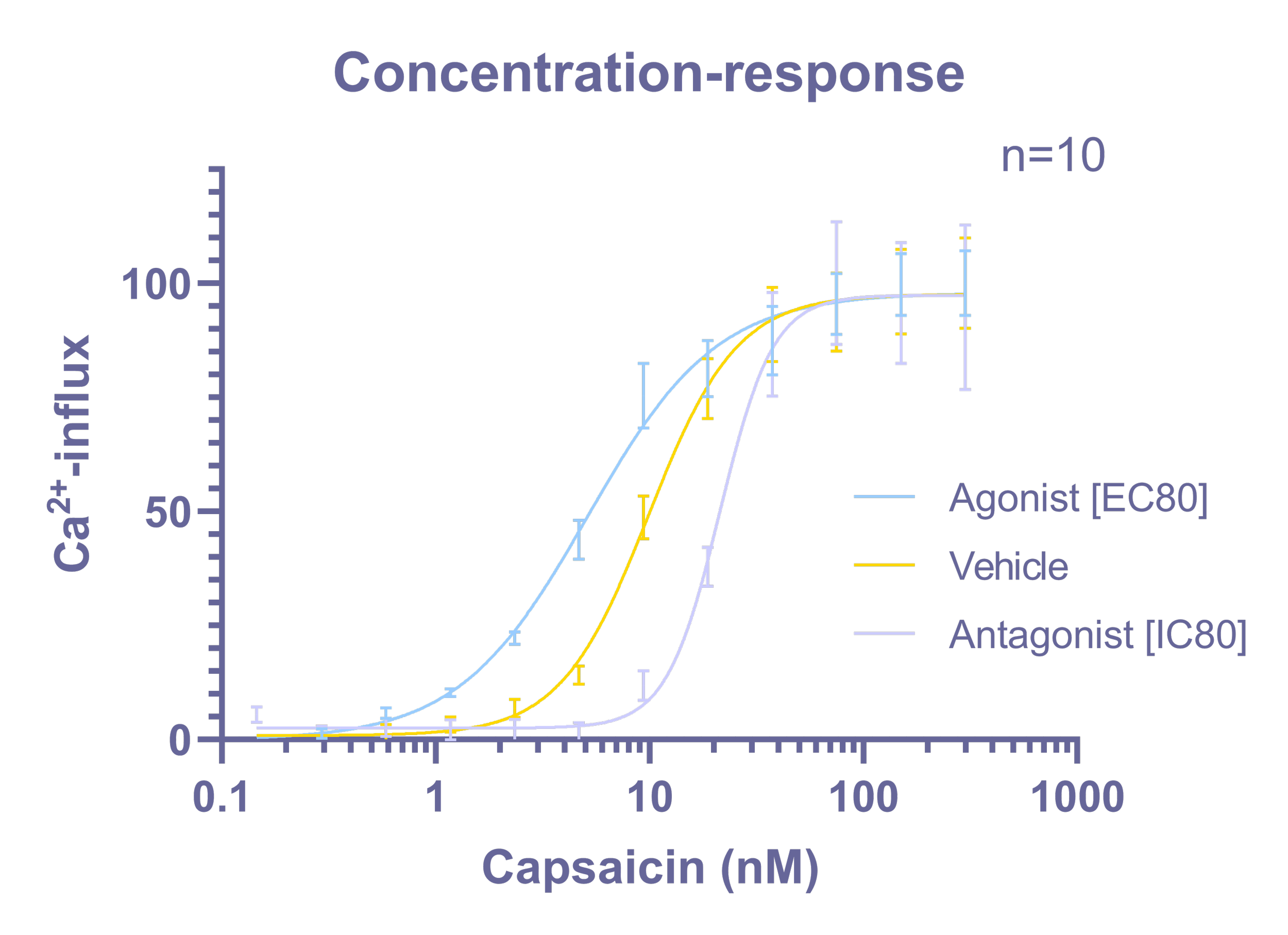
TRPV1 receptor activation by Capsaicin, the receptor activation was measured in the presence of agonist or antagonist on the TRPV1-expressing cell-line.